
Alibaba Unveils New AI Chip and 10-Trillion-Parameter Model Plan as Global Technology Race Accelerates
 A to Z Times Contributor—SEPTEMBER 25, 2026·3 MINS READ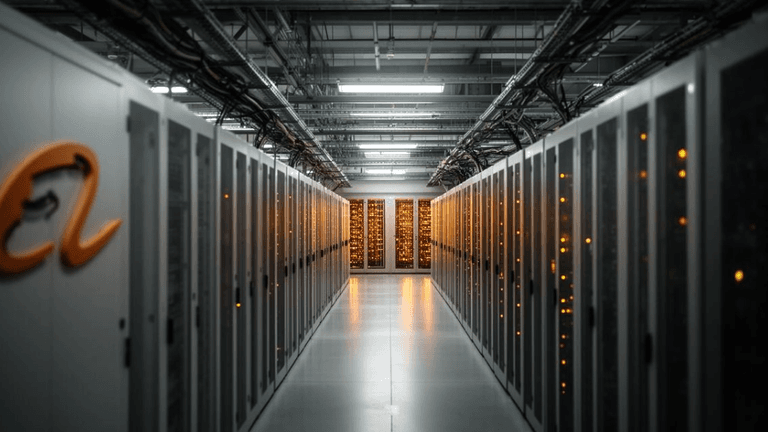
The Chinese technology giant is expanding its AI ambitions as competition over chips, computing power and advanced models intensifies.
Alibaba unveiled a new artificial intelligence chip and outlined plans for a future model with as many as 10 trillion parameters, putting the Chinese technology company at the center of the accelerating global competition over AI hardware and software.
The announcements came during Alibaba's annual technology conference in Hangzhou and highlighted the company's strategy of developing both the computing infrastructure and AI models needed to compete at scale.
A New AI Chip
Alibaba introduced the Zhenwu V900, which the company described as its most powerful AI chip to date.
According to Alibaba, the processor provides approximately three times the performance of its predecessor.
AI chips are critical because they provide the computing power required to train and operate advanced models.
The industry has historically depended heavily on high-performance processors supplied by U.S. companies, but Chinese technology companies have increasingly invested in domestic alternatives.
Alibaba's new chip is part of that broader effort.
Plans for a Larger AI Model
Alibaba also announced plans to train a model with up to 10 trillion parameters.
Parameters are numerical values used by AI models to process information and generate outputs. Parameter count is not by itself a complete measure of an AI system's capability, but the size of a planned model provides an indication of the scale of computing resources required.
Alibaba's current leading model, Qwen3.8-Max, has 2.4 trillion parameters, according to reporting by The Associated Press. Another Chinese company, Moonshot, has developed an open model with 2.8 trillion parameters.
The planned expansion represents a significant increase in scale.
Data Centers Become Strategic Infrastructure
Alibaba is also planning a major expansion of its data-center capacity.
The company said it intends to reach 20 gigawatts of capacity by 2032.
Data centers require enormous amounts of electricity, cooling and networking infrastructure.
As AI models become larger and more widely used, companies need additional computing capacity not only for training but also for serving users.
That makes data-center expansion a strategic business decision.
U.S.-China Technology Competition
The announcements arrive shortly before and during heightened attention on U.S.-China technology relations.
The two countries are competing over advanced semiconductors, AI models and computing infrastructure.
The United States has imposed restrictions affecting China's access to some advanced AI chips, while Chinese companies have sought ways to develop domestic alternatives.
Alibaba's announcement therefore has implications beyond one company's product strategy.
It demonstrates that restrictions on foreign technology do not necessarily eliminate a country's ability to develop its own technology ecosystem.
Business Implications
AI development requires investment at multiple levels.
Companies must finance research, hire specialized engineers, acquire computing resources and build data-center capacity.
Alibaba's plans illustrate how the AI industry is becoming increasingly capital-intensive.
The company is simultaneously investing in chips, models and infrastructure.
For businesses around the world, developments like these could eventually affect the cost and availability of AI services.
Competition among technology providers can create new products and capabilities while also encouraging companies to diversify their sources of computing hardware.
A Wider Industry Shift
The global AI industry is moving beyond the early stage of simply demonstrating what generative models can do.
Companies are now competing to establish complete ecosystems.
That includes chips, cloud infrastructure, data centers, models, developer tools and consumer applications.
Alibaba's strategy reflects that shift.
The company is attempting to strengthen multiple layers of its technology stack rather than relying entirely on outside suppliers.
Why the Announcement Matters
The new chip and model plans illustrate the scale of the global AI competition.
China is investing heavily in domestic computing technology even as access to some advanced foreign components remains restricted.
At the same time, U.S. technology companies continue investing heavily in their own AI models and infrastructure.
The result is an increasingly competitive technology landscape in which computing power has become a strategic business resource.
Alibaba's announcements provide another indication that the race is no longer limited to individual AI models. It increasingly involves the hardware, infrastructure and industrial capacity needed to operate those systems at scale.

A to Z Times Contributor
This article features partner, contributor, or branded content from a third party. Members of the A to Z Times editorial staff were not involved in the creation of this content. All views and opinions are those of the contributor alone.