

Microsoft’s AI Infrastructure Push Highlights the Race for More Efficient Computing
 A to Z Times Contributor—OCTOBER 12, 2026·5 MINS READ
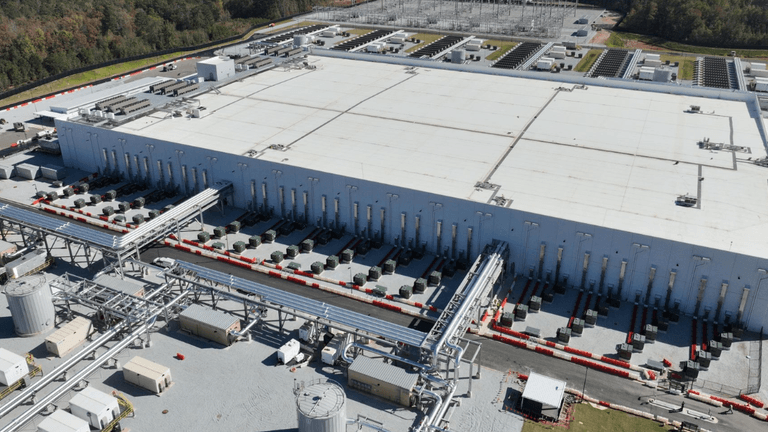
The company’s reported Maia 300 announcement reflects the growing importance of custom chips in the expanding artificial intelligence market.
Microsoft’s development of custom artificial intelligence hardware is drawing attention to a central challenge facing the technology industry: how to deliver increasingly capable AI services without allowing computing costs and energy requirements to rise unchecked.
Technology coverage on October 12 reported the introduction of Maia 300, a next-generation AI accelerator designed for Microsoft’s expanding computing infrastructure. The reported plan called for deployment at large scale in 2027, reflecting the long-term investments required to support generative AI across cloud services and business software.
The development illustrates how competition in AI is extending beyond software models. Companies are increasingly working to control the hardware, data centers, and systems needed to train and operate their models efficiently.
Why Custom AI Chips Matter
AI accelerators are specialized processors designed to perform the calculations used by machine-learning systems. Unlike general-purpose processors, these chips can be optimized for particular workloads, including the large-scale mathematical operations needed to train models and generate responses.
Custom silicon gives cloud providers greater influence over how computing resources are designed and deployed. By tailoring hardware to their own systems, companies can seek improvements in performance, power efficiency, and operating costs.
Those improvements matter because generative AI requires computing capacity both during model development and when users interact with finished systems. Training can involve extensive processing, while serving a widely used AI assistant creates continuous demand as requests arrive from individuals and businesses.
A hardware improvement that reduces the resources required for each task can potentially make services more economical to operate. At large scale, small efficiency gains may influence data-center capacity planning and the cost of delivering software to customers.
AI Demand Is Reshaping Data Centers
The rapid adoption of generative AI has increased demand for data centers equipped with specialized computing hardware. These facilities require not only processors but also reliable electricity, networking equipment, cooling systems, and supporting infrastructure.
Building capacity takes time. Companies must secure suitable sites, arrange power supply, install equipment, and integrate new systems into their existing cloud networks. The scale of these projects means hardware decisions can influence infrastructure planning years before a new service reaches full deployment.
Energy efficiency is especially important because AI workloads can require substantial electricity. Improving the amount of useful computing completed for a given energy input can help operators manage operating costs and make better use of existing capacity.
However, chip efficiency alone does not resolve every infrastructure challenge. Total energy consumption depends on how many chips are deployed, how intensively they are used, the complexity of the workloads, and the performance required by customers.
As AI demand expands, companies must balance technical performance with the financial and physical limits of operating large computing facilities.
Competition Among Technology Companies
Microsoft operates a broad cloud and software business, giving it several potential uses for custom AI hardware. Its cloud infrastructure supports enterprise workloads, while its software portfolio includes productivity applications and developer tools that increasingly incorporate AI features.
Owning more of the hardware design process can provide a degree of flexibility when allocating computing resources across different services. It may also reduce dependence on a single supplier or processor architecture.
Nevertheless, developing a custom chip does not automatically make a company independent of the wider semiconductor industry. Advanced processors rely on specialized manufacturing, packaging, memory, networking, and other components supplied through complex international supply chains.
Performance must also be evaluated against competing hardware under comparable conditions. Benchmarks, workload compatibility, availability, reliability, and the cost of integrating a processor into existing systems all affect its commercial usefulness.
For cloud customers, the most important question is often not which chip is used but whether the resulting service delivers suitable performance, dependable access, and competitive pricing.
Implications for Businesses
Companies adopting AI increasingly need to evaluate the infrastructure behind the tools they use. Applications that summarize documents, assist software development, analyze information, or automate routine tasks depend on computing resources that must be available consistently.
Greater hardware efficiency could support broader deployment by lowering some operating costs. However, the savings experienced by customers will depend on how infrastructure costs translate into cloud prices and software subscriptions.
Businesses also need to consider data protection, reliability, integration, and the consequences of inaccurate AI outputs. Faster or less expensive processing does not eliminate the need for human review where decisions have significant consequences.
For smaller organizations, the shift toward specialized AI infrastructure may be most visible through the services offered by cloud providers rather than through direct purchases of custom processors. Their practical choices will continue to depend on access, pricing, and the capabilities available through software platforms.
The Energy and Investment Questions
Large AI infrastructure programs require substantial capital investment. Companies must assess whether anticipated demand will justify the expense of building and operating additional capacity.
Power availability is becoming an increasingly important factor in data-center development. Facilities may compete with other users for electricity and require investments in grid connections, cooling, and other infrastructure.
Efficiency improvements can help, but the overall environmental impact depends on both the energy used and the volume of computing activity. If efficiency makes AI substantially cheaper, demand may expand enough to offset part of the savings.
These questions place custom chips within a larger debate about how to scale AI responsibly and economically.
A Longer-Term Technology Strategy
Microsoft’s reported Maia 300 initiative reflects the growing strategic importance of computing hardware in the AI market. Companies are competing to build systems that can deliver sophisticated capabilities while managing cost, energy use, and operational complexity.
The significance of custom processors will depend on demonstrated performance and their ability to support real-world workloads at scale. Manufacturing timelines, software compatibility, and infrastructure readiness will also determine how quickly new designs influence commercial services.
For businesses and consumers, advances in AI hardware may eventually shape the speed, availability, and price of digital tools. The broader competition is no longer limited to building better models; it increasingly involves building the computing systems that make those models practical to use.

A to Z Times Contributor
This article features partner, contributor, or branded content from a third party. Members of the A to Z Times editorial staff were not involved in the creation of this content. All views and opinions are those of the contributor alone.