
NASA Launches New Space Telescope to Study the Universe's Biggest Mysteries
 A to Z Times Contributor—AUGUST 30, 2026·3 MINS READ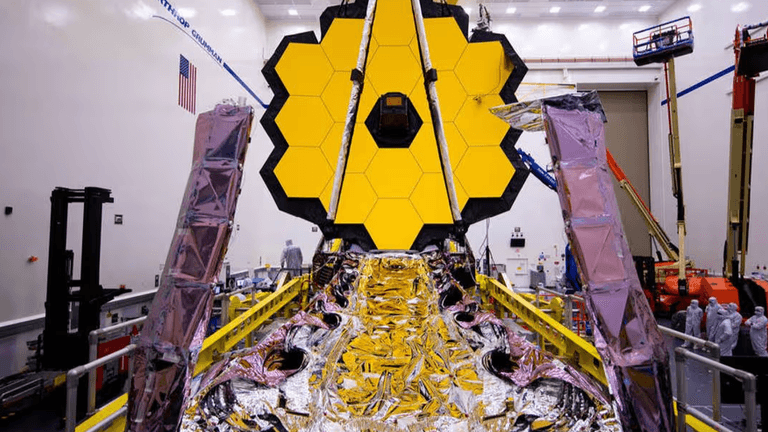
NASA launched a new flagship space observatory from Florida on Sunday, sending the agency's latest major astronomical mission into orbit to investigate some of the universe's most important unanswered questions.
The launch took place from Florida and marked the beginning of a mission focused on astrophysics and cosmology. Reuters reported that the telescope is designed to explore major questions about the universe, extending NASA's long-running effort to study objects and phenomena that cannot be observed effectively from Earth.
Space telescopes are particularly valuable because Earth's atmosphere can interfere with observations at many wavelengths of light.
By placing observatories above the atmosphere, scientists can collect cleaner measurements and examine portions of the electromagnetic spectrum that are difficult or impossible to observe from the ground.
The new observatory joins a long line of NASA missions that have transformed scientific understanding of the cosmos.
Space-based telescopes have helped researchers study distant galaxies, stars, planets and the evolution of the universe itself.
They have also demonstrated how observations made far from Earth can answer questions that cannot be resolved through terrestrial instruments alone.
The latest launch is significant because flagship observatories typically represent years of scientific planning, engineering and international cooperation.
Such missions are designed around specific research goals but often produce discoveries that extend beyond their original objectives.
One of the central advantages of modern space astronomy is the ability to observe extremely distant objects.
Because light travels at a finite speed, observing distant galaxies effectively allows scientists to see them as they appeared in the past.
The farther an object is from Earth, the longer its light has traveled before reaching a telescope.
That principle allows astronomers to investigate how galaxies and other cosmic structures developed over billions of years.
The new telescope is expected to contribute to that broader scientific effort.
NASA's continuing investment in space observatories also reflects the importance of astronomy to understanding fundamental questions about the origins and evolution of the universe.
Scientists remain interested in questions involving the formation of galaxies, the behavior of stars and the physical processes that shaped the cosmos after its earliest stages.
Observatories can provide data that help researchers test competing theories and refine measurements.
The mission also demonstrates the continuing role of Florida as one of the world's most important launch locations.
NASA and commercial launch providers use Florida's Space Coast for missions ranging from scientific satellites to crewed spacecraft.
Its geography makes the region particularly useful for orbital launches because rockets can travel over the Atlantic Ocean rather than populated land.
The scientific value of the telescope will ultimately depend on the quality of its observations after launch.
Spacecraft must complete deployment procedures, establish communications, verify their instruments and undergo calibration before researchers can begin relying fully on the collected data.
That process can take weeks or months depending on the mission.
Once operational, however, the observatory could contribute to research programs involving scientists around the world.
Modern astronomy increasingly depends on international collaboration because major missions require specialized instruments, large research teams and extensive computing resources.
The telescope's observations are also likely to generate enormous quantities of data.
Scientists must process those measurements before turning them into images, catalogs and scientific conclusions.
That work can produce discoveries long after the launch itself has disappeared from the headlines.
Sunday's launch therefore represented the beginning rather than the conclusion of the mission.
NASA's new observatory will now move into the operational phase, where engineers and scientists will prepare its instruments for research.
The broader significance lies in what those instruments may reveal.
Each major space telescope has expanded humanity's ability to observe the universe, and the latest mission continues that tradition.
For the scientific community, the launch opens another opportunity to investigate cosmic phenomena that remain poorly understood.
For the public, it marks another step in the continuing effort to answer some of astronomy's oldest questions: how the universe developed, how its structures formed and what remains hidden beyond the limits of existing observation.

A to Z Times Contributor
This article features partner, contributor, or branded content from a third party. Members of the A to Z Times editorial staff were not involved in the creation of this content. All views and opinions are those of the contributor alone.