

Detox Is More Than a Cleanse: What Gets Removed, How It's Removed—and From Where
 A to Z Times Contributor—OCTOBER 9, 2026·7 MINS READ
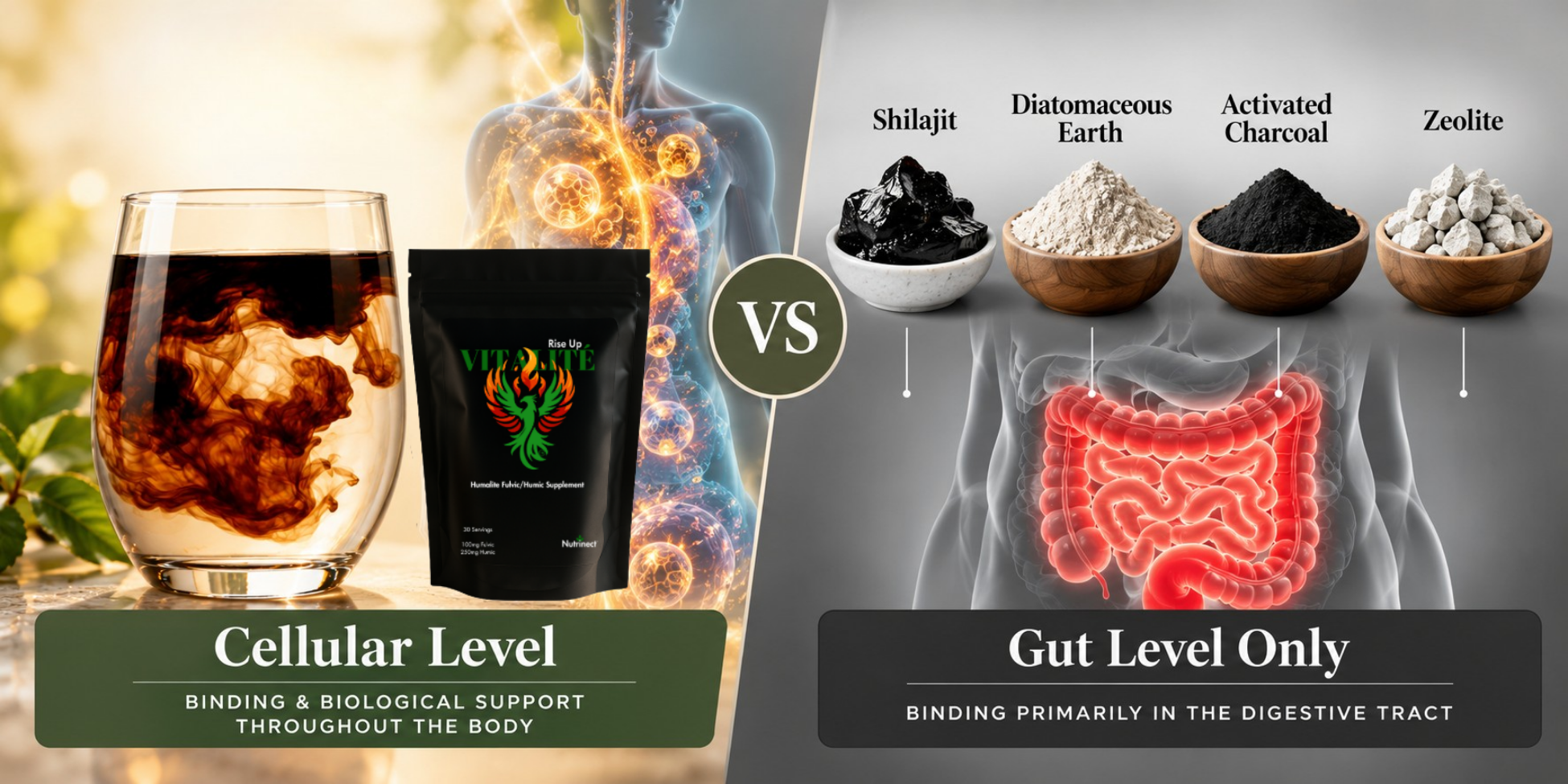
Unlike traditional binders that work primarily in the gut, humic compounds are being studied for their binding, protective, and biological interactions at the cellular level.
“Detox” has become one of the most misunderstood words in wellness. Juice cleanses, teas, fasting, powders, and short-term programs often present detoxification as something the body does periodically.
In reality, detoxification is ongoing. The human body is continuously identifying, processing, binding, transforming, and eliminating substances it doesn't need. The liver, kidneys, and digestive system work together every day to remove unwanted compounds.
That makes understanding detoxification less about the latest cleanse and more about three important questions:
What are you trying to remove?
How is it being removed?
And where is it being removed from?
Many detox binders primarily work within the gastrointestinal tract, binding certain substances and helping carry them out of the body. That's valuable—but it's only one part of the process.
What happens when unwanted compounds aren't simply passing through the gut, but are interacting with cells and tissues elsewhere in the body?
The Modern Body Has More to Deal With
Long before supplements existed, fulvic and humic compounds were naturally present in biologically active soils and entered the food chain through plants and foods. As modern agricultural practices have changed soil biology and reduced humic substances in many soils, dietary exposure to these compounds has declined.
That soil-to-human connection is central to Nutrinect's approach. While Vitalité Humalite restores fulvic and humic compounds to the modern diet, YieldMax Humalite brings them back to the soil—supporting nutrient availability, biological activity, and healthier soil function where the cycle begins.
At the same time, people today are exposed to more unwanted substances through food, water, air, and everyday products, including heavy metals, pesticides and herbicides, air pollution, and chemicals found in household and personal-care products.
One example is glyphosate, a widely used herbicide studied for its interactions with humic substances.
The contrast is significant: our dietary exposure to compounds known for their binding and protective properties has declined while our exposure to environmental compounds has increased.
This shift helps explain the growing interest in supporting the body's natural detoxification processes.
What a Binder Actually Does
A binder attracts and attaches to certain substances so they can be carried toward elimination rather than absorbed or left to interact elsewhere in the body.
Chelation is a more specific type of binding. A chelating compound can attach to certain substances—particularly metals—at multiple points, creating a more stable bond. This is why chelation is often discussed in connection with heavy metals.
But “binder” doesn't tell the whole story. Not all binders bind the same substances, with the same strength, or in the same places. Most primarily remain within the digestive tract, and some interact differently based on their molecular size, structure, and chemical properties.
When it comes to detoxification, the question isn't simply whether something can bind. It's what it can bind, how it binds it, and where those interactions can occur within the body.
The Gut Is Important—but It Isn't the Whole Story
Many traditional detox binders work primarily inside the digestive tract. As substances move through the gut, these binders can attach to certain unwanted compounds, helping prevent their absorption or carrying them out of the body through normal elimination. That's valuable—but it also means their activity is largely limited to what they encounter in the gastrointestinal system.
But what about unwanted substances that have already moved beyond the gut and are interacting with cells and tissues elsewhere in the body?
This is where humic compounds become particularly interesting. Research into humic substances extends beyond their activity in the digestive tract. Their interactions have also been studied at the cellular and tissue level, including their roles in cellular protection, oxidative balance, healthy immune activity, and other biological processes throughout the body.
This broader activity changes how we think about detoxification. Binding something before it is absorbed is important, but supporting the body once unwanted substances have moved beyond the digestive tract adds another dimension.
Where a compound can interact may be just as important as what it can bind.
Humic's Remarkable Binding and Chelating Activity
Humic's broad binding capabilities come from its complex carbon structure, which contains numerous active binding sites and functional groups that interact with minerals, metals, and other substances.
This is especially important in research involving heavy metals. Humic compounds can bind and chelate certain metals through multiple interactions, forming stable associations that can reduce their availability and support their removal. Research has also demonstrated binding interactions between humic substances and glyphosate, showing that this activity isn't limited to metals.
Their structural complexity allows humic compounds to interact with a wide range of substances, helping explain their study across environmental science, agriculture, and biological systems.
These properties also help explain humic's relevance to natural detoxification. But humic doesn't “detox the body” by itself. The body has its own systems for processing and eliminating unwanted substances.
Humic supports those processes through its binding, chelating, protective, and broader biological interactions—helping the body manage and eliminate substances it doesn't need.
Detoxification Is Also About Protection
Detoxification isn't only about binding and eliminating unwanted substances. Exposure to heavy metals, chemicals, and other compounds can also affect cells and biological systems, including by contributing to oxidative stress.
That's why research into humic compounds extends beyond binding and chelation. Humic substances have also been studied for their roles in cellular protection, oxidative balance, healthy immune activity, and intestinal barrier integrity—helping support the systems affected while the body processes and eliminates unwanted substances.
This adds an important second dimension to detoxification. It's not only about helping the body bind and eliminate what it doesn't need. It's also about supporting and protecting the cells, tissues, and biological systems those substances can affect along the way.
Humic's role in detoxification isn't simply about removal—it's about removal and protection.
Where Fulvic Fits In
Humic's binding and protective properties don't make fulvic any less important. Their differences are what make them complementary.
Fulvic compounds are smaller and highly mobile. They naturally contain trace minerals and micronutrients, help transport and support the utilization of nutrients, and interact readily with cells and tissues. Research has also explored their roles in cellular hydration, antioxidant activity, energy production, and cellular health.
In simple terms, fulvic helps the body take in and utilize what it needs, while humic helps bind and clear what it doesn't. Their biological activities also overlap in areas including cellular health, antioxidant protection, mineral utilization, and immune support.
Together, these functions create a broader, synergistic system. Detoxification is another example of why treating fulvic and humic as competing ingredients misses the larger relationship: each contributes something different to what they accomplish together.
A Different Approach to Daily Detoxification Support
Vitalité Humalite isn't a cleanse or short-term detox program. It's a daily wellness formulation designed to support the body's normal biological processes, including natural detoxification.
Vitalité Humalite begins with freshwater Humalite from Alberta, Canada, the purest natural source of humic and fulvic compounds. Both fractions naturally occur together in an approximately 70% humic and 30% fulvic relationship. Using patented Fulvic Isolation Technology (FIT™), a chemical-free purification process, Vitalité Humalite removes impurities while preserving their natural balance and molecular integrity.
Each serving provides 250 mg of humic compounds and 100 mg of fulvic compounds, so consumers know exactly how much of each they receive. The powder dissolves in water, contains no fillers, preservatives, or artificial ingredients, and is independently third-party tested for purity.
Humic contributes its extensive binding, chelating, protective, and cellular-level biological properties, while fulvic provides micronutrients and supports mineral utilization, cellular hydration, and cellular health. Together, they support both sides of the process—helping the body manage and clear what it doesn't need while supporting the cells and biological systems involved along the way.
Rather than treating detoxification as an occasional event, Vitalité Humalite provides daily support for an ongoing biological process while preserving the natural synergy between fulvic and humic compounds.
Rethinking What “Detox” Really Means
Detoxification is more complex than simply removing unwanted substances from the digestive tract. Research into humic compounds is expanding our understanding of their biological activity, including interactions studied at the cellular level.
This broader perspective is central to Vitalité Humalite, bringing together humic's binding and protective properties with fulvic's complementary role in supporting nutrient utilization and cellular health.
Detox isn't an event. It's an ongoing biological process—and supporting it means thinking about what gets removed, how it's removed, where it's removed from, and what the body needs throughout the process.
Explore More About Nutrinect
Connect with Nutrinect, Facebook, X, and TikTok.
Disclaimer:
This article is for informational purposes only and is not intended to promote, encourage, or provide professional advice related to health, nutrition, or agricultural practices. Always consult a qualified professional or trusted authority before engaging in any activities related to dietary supplements, soil treatments, or regenerative agriculture, especially if doing so may have legal, financial, or personal consequences. The author and publisher are not responsible for any losses, damages, or outcomes resulting from the use or reliance on the information provided.

A to Z Times Contributor
This article features partner, contributor, or branded content from a third party. Members of the A to Z Times editorial staff were not involved in the creation of this content. All views and opinions are those of the contributor alone.