


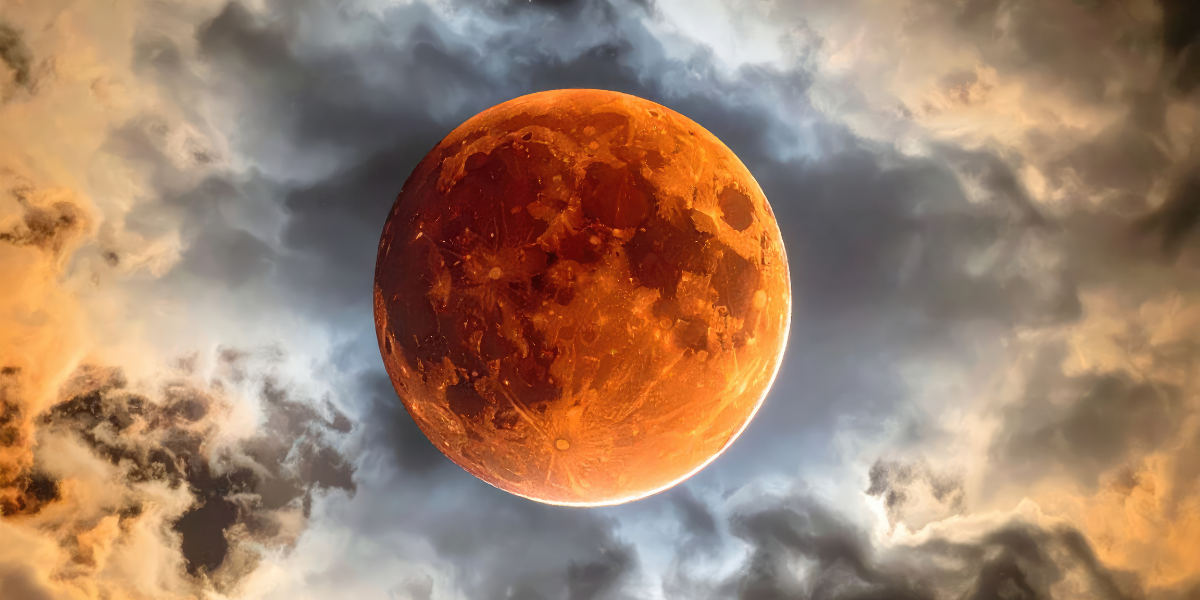
A rare total lunar eclipse illuminated skies across the United States early Tuesday morning, drawing widespread public interest and marking one of the most significant astronomical events of the year. Commonly referred to as a “blood moon,” the celestial phenomenon was visible across much of the country before sunrise, offering millions of Americans a chance to witness a dramatic transformation of the moon.
A total lunar eclipse occurs when Earth passes directly between the sun and the moon during a full moon phase. As Earth’s shadow fully covers the moon, sunlight filtering through the planet’s atmosphere casts a reddish-orange glow on the lunar surface. This effect, similar to the warm hues seen during sunrise and sunset, gives the eclipse its popular nickname.
The March 3 eclipse began in the early morning hours, progressing from a subtle dimming known as the penumbral phase into a partial eclipse, and finally into totality. During totality, which lasted approximately one hour, the moon appeared deep red in many parts of the country. Viewers in western states experienced darker viewing conditions, while those along the East Coast saw the eclipse closer to daybreak as the sky gradually brightened.
Unlike a solar eclipse, a lunar eclipse can be observed safely without protective eyewear. Astronomers recommend clear skies and an unobstructed horizon for optimal viewing, though binoculars or telescopes can enhance details such as lunar surface features. The accessibility of lunar eclipses often contributes to their broad appeal, drawing in casual observers as well as astronomy enthusiasts.
This particular event is especially notable because total lunar eclipses are relatively infrequent. While partial lunar eclipses occur more often, total eclipses visible across large portions of North America are rarer. The March 3 eclipse is among the few opportunities this decade for Americans to observe a complete transition into totality under favorable viewing conditions.
Public interest in the event extended beyond individual skywatchers. Science centers, planetariums, and educational institutions across the country used the occasion to promote learning about astronomy and Earth–moon dynamics. Educators emphasized how eclipses help illustrate fundamental scientific principles, including orbital mechanics, light scattering, and atmospheric composition.
Beyond its scientific importance, the eclipse arrives during a seasonal transition period. Early March often signals a gradual shift from winter toward spring in many parts of the United States. As communities begin organizing spring festivals, outdoor activities, and cultural programs, events like a lunar eclipse serve as a reminder of the changing rhythms of both nature and society.
In addition to the eclipse, March is traditionally a month of heightened engagement in sports and community gatherings. College basketball tournaments are underway nationwide, marking the beginning of one of the most anticipated periods in American sports. Local arts organizations and recreational groups are also launching spring programming, reflecting renewed public interest in shared experiences after winter months.
Astronomers note that lunar eclipses provide more than visual spectacle. The red coloration observed during totality offers indirect insight into Earth’s atmosphere. Variations in the depth and tone of the red hue can be influenced by atmospheric particles such as dust or volcanic ash. In this way, eclipses can serve as natural indicators of atmospheric conditions.
For many Americans, the early timing of today’s eclipse required setting alarms before dawn. Despite the early hour, social media platforms were filled with images and reactions as observers shared photographs and impressions. The widespread participation highlights the continued public fascination with space science and celestial events.
Looking ahead, skywatchers will not have another widely visible total lunar eclipse over the United States for several years. While partial eclipses and other astronomical events will occur, a full totality visible across broad regions of the country remains a comparatively rare opportunity.
The March 3, 2026 total lunar eclipse stands out as a moment of shared national experience, one that combined scientific wonder, seasonal transition, and public engagement. As communities continue to move into spring activities and events, today’s “blood moon” serves as both a reminder of the dynamic universe beyond Earth and a celebration of the curiosity that connects observers under the same sky.
