

Apple Introduces Touchscreen MacBook Pro With OLED Display and New M5 Pro and M5 Max Chips
 A to Z Times Contributor—OCTOBER 28, 2026·4 MINS READ
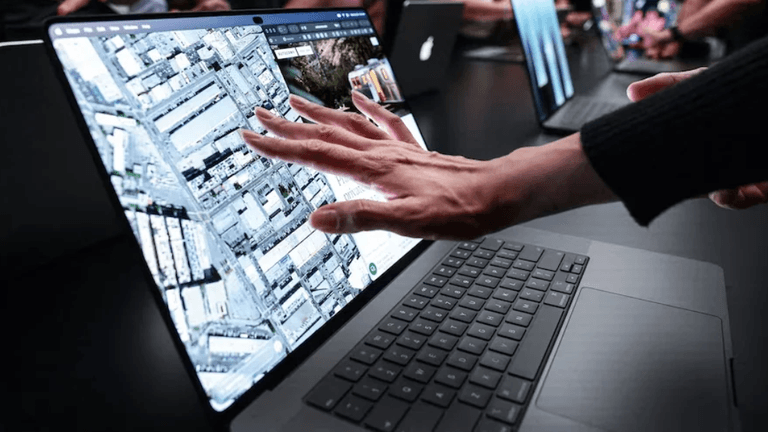
Apple introduced a redesigned MacBook Pro featuring touchscreen controls, an OLED display, and upgraded processors.
Apple announced a new MacBook Pro on October 28, introducing touchscreen functionality to the MacBook Pro line alongside a new display system and updated processing hardware. The announcement marked a significant change in Apple's laptop design, bringing touch interaction to a product family traditionally operated through a keyboard, trackpad and external pointing devices.
The new models are available in 14-inch and 16-inch sizes and use Apple's M5 Pro and M5 Max chips. Apple also introduced a tandem OLED display technology marketed as PROLED XDR, designed to provide high contrast, strong brightness and a wider range of colors for demanding professional work.
The company opened preorders on October 28, with customer availability and in-store sales scheduled to begin November 6. The 14-inch model with M5 Pro starts at $2,899 in the United States, while the 16-inch version starts at $3,399.
Touch comes to the MacBook Pro
The addition of touch controls changes the way users can interact with content on the laptop. Apple described functions including scrolling through webpages, enlarging photographs, moving presentation elements and interacting directly with creative applications.
For designers, photographers and video professionals, direct manipulation may offer a useful alternative to trackpad-based workflows. Users can interact with visual elements where they appear on the screen, potentially making certain tasks more intuitive.
The company is not abandoning traditional input methods. Keyboard shortcuts, trackpad gestures and the physical keyboard remain part of the experience, allowing users to choose the approach that best suits a particular task.
Touchscreen support may also benefit developers who need to test how their applications behave when users interact with content directly. Musicians working with software instruments could use touch input for certain controls, while illustrators may value the ability to work directly on visual elements.
The usefulness of these features will depend on how applications implement them and whether users find touch interaction more efficient than established methods.
A new display technology
The new MacBook Pro uses tandem OLED technology to produce high contrast and detailed imagery. Apple says the display can reach peak HDR brightness of up to 2,000 nits and supports a 120Hz variable refresh rate.
Display performance is particularly important for professionals working with photographs, video, graphic design and visual effects. Accurate color reproduction and contrast can help users evaluate images and footage, although professional workflows may still require calibration and appropriate viewing conditions.
The display's wider color support is intended to serve people who work across different visual standards. For users whose work depends on color accuracy, the ability to assess material directly on a laptop can reduce the need to rely on a separate monitor for every task.
The company also redesigned the hinge to improve stability when users touch the screen. That detail addresses a practical issue with touchscreen laptops: direct pressure on the display can cause unwanted movement if the hinge is not designed to keep the screen steady.
Processing power and memory
Apple's M5 Pro and M5 Max chips are intended to support demanding professional workloads. The new models offer configurations with up to 128GB of unified memory and up to 16TB of storage, according to the company's announcement.
Large memory configurations can be important for users who work with high-resolution video, complex software projects, large image libraries or multiple applications simultaneously. Storage capacity can also matter for people managing substantial media files and project archives.
The laptops include Thunderbolt 5 connectivity, a 12-megapixel Center Stage camera, studio-quality microphones and a six-speaker audio system. Apple also highlighted battery life of up to 24 hours, although actual performance will vary depending on configuration, workload and usage.
Competition in professional computing
The MacBook Pro announcement arrives in a competitive market where laptop makers are trying to combine performance, portability, battery life and new ways of interacting with software. Touchscreens have long been available on many Windows laptops, but Apple's decision to introduce the feature to the MacBook Pro changes the options available to customers who prefer macOS.
The new models also carry premium starting prices, positioning them toward professional users and customers who need higher-performance hardware. Buyers will need to weigh the new display and touch features against their current equipment, software requirements and budget.
With preorders opening on October 28 and availability planned for early November, the announcement gives professionals an opportunity to evaluate whether the changes justify upgrading their existing systems.

A to Z Times Contributor
This article features partner, contributor, or branded content from a third party. Members of the A to Z Times editorial staff were not involved in the creation of this content. All views and opinions are those of the contributor alone.