
U.S. Factory Output Gains as Technology Manufacturing Supports Industrial Growth
 A to Z Times Contributor—AUGUST 18, 2026·3 MINS READ
U.S. industrial production increased in July, with manufacturing output gaining ground as technology-related production helped offset weakness in some other industrial sectors.
The Federal Reserve reported that total industrial production rose 0.2% during the month, while manufacturing output also increased 0.2%. Manufacturing excluding motor vehicles and parts rose 0.4%. Total industrial production was 1.1% higher than a year earlier.
The data offered a mixed but important picture of the U.S. economy, showing continued industrial activity even as housing and other rate-sensitive sectors faced pressure.
Semiconductor Production Provides Support
Technology-related manufacturing was among the stronger areas of the industrial economy.
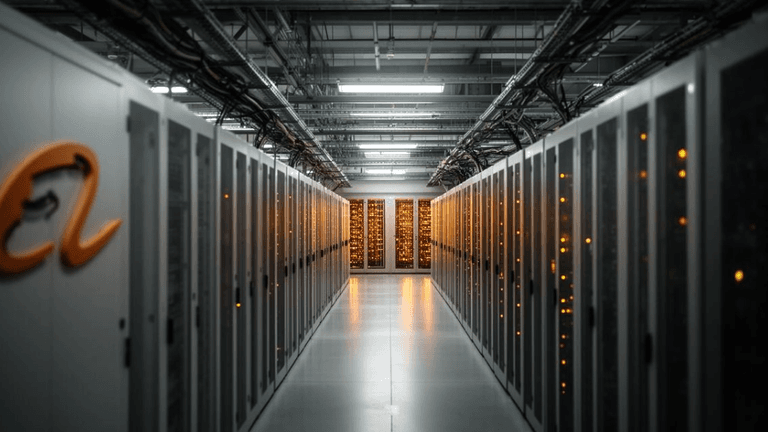
Reuters reported that semiconductor output increased 2.4% in July as investment in artificial-intelligence infrastructure continued to support demand for technology equipment. High-tech and industrial equipment production also contributed to the overall factory increase.
The semiconductor industry has become increasingly important to the broader U.S. technology economy because chips are essential components in data centers, computers, communications equipment and AI systems.
Higher semiconductor production therefore reflects not only demand for individual electronic products but also broader investment in computing infrastructure.
Vehicle Production Remains a Weak Point
The manufacturing results were not uniformly positive.
Motor vehicle and heavy-truck production declined during the month, according to Reuters. The weakness in vehicle output was offset by stronger activity in other manufacturing categories.
The contrast shows how technology investment is becoming an increasingly important component of industrial activity.
Manufacturing performance depends on many different industries, and changes in consumer demand, supply chains and business investment can affect individual categories in different ways.
Housing Provides a Different Signal
The industrial data arrived alongside weaker housing indicators.
The Census Bureau reported that total housing starts fell 12.4% in July to an annualized 1.239 million units. Single-family starts fell 9.9% from June and 15.7% from a year earlier.
Pending home sales also declined 2.3% from June and 2.2% from a year earlier, reaching their lowest level since January.
The contrasting results show that technology and industrial investment were supporting parts of the economy while high financing costs were weighing on housing activity.
Capacity Remains Below Long-Term Averages
The Federal Reserve reported that industrial capacity utilization edged up to 76.3% in July.
Despite the increase, utilization remained 3.1 percentage points below its long-term average for the period from 1972 through 2025.
That figure indicates that factories were not operating near historical maximum utilization levels.
The combination of modest production growth and available capacity provides context for the current industrial environment. Companies can increase output without necessarily operating at unusually high utilization rates.
Technology Is Affecting the Physical Economy
The latest data illustrate the increasingly direct relationship between technology investment and traditional manufacturing.
AI systems require processors, servers, networking equipment and data centers. Investment in those systems creates demand for physical products that appear in industrial-production statistics.
The relationship is particularly visible in semiconductor production, which increased 2.4% during July.
That trend means technological development is increasingly influencing factories, equipment suppliers and industrial employment.
A Mixed Economic Picture
The July industrial figures do not point to a uniform acceleration across the U.S. economy.
Instead, they show several different forces operating simultaneously. Manufacturing increased modestly, technology-related production remained strong, housing construction weakened and home-sale contracts declined.
For businesses, the pattern highlights the importance of sector-specific demand. Companies connected to AI infrastructure and semiconductors are operating in a different environment from businesses heavily dependent on residential construction or consumer vehicle production.
The Federal Reserve's latest data therefore provide a useful snapshot of an economy with uneven momentum.
Technology investment is helping support industrial activity, while high financing costs continue to constrain housing. The balance between those forces will remain important for understanding the direction of U.S. economic growth.

A to Z Times Contributor
This article features partner, contributor, or branded content from a third party. Members of the A to Z Times editorial staff were not involved in the creation of this content. All views and opinions are those of the contributor alone.