

Why Sales Teams Struggle to Close Deals
 A to Z Times Contributor—MAY 25, 2026·4 MINS READ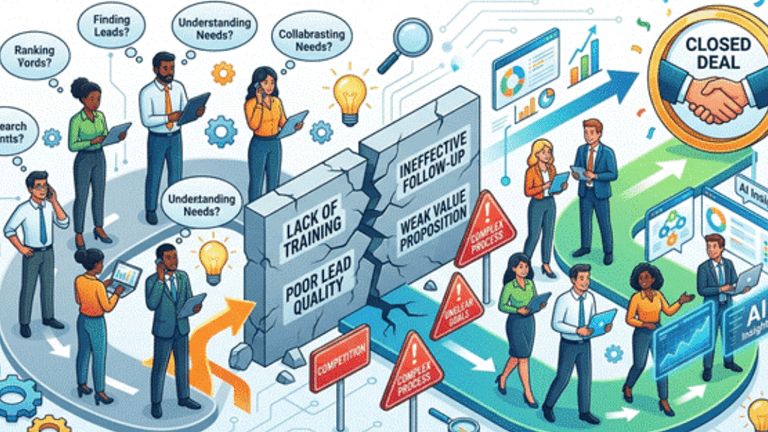
Sales teams often miss deals due to weak leads, poor follow-ups, and low engagement. Fixing process gaps improves close rates.
Sales teams spend countless hours reaching out to prospects, following up on conversations, and building relationships with potential customers, often supported by outbound telemarketing services. Yet even experienced teams sometimes struggle to turn opportunities into completed deals. In many cases, the issue is not a lack of effort or talent. Instead, the problem often comes from breakdowns within the sales process itself.
From weak Lead Generation to inconsistent follow-ups, small inefficiencies can quietly slow down revenue growth over time. Businesses across industries face similar challenges, especially as buyers become more informed and selective during the decision-making process.
Understanding where these breakdowns occur can help organizations improve their Sales performance and build stronger customer relationships.
Weak Lead Generation Creates Early Pipeline Problems
Every sales process begins with Lead Generation. If the incoming pipeline lacks quality Sales Prospects, closing deals becomes much harder later on.
Many businesses struggle because they target audiences too broadly or fail to fully understand customer needs. As a result, sales representatives spend valuable time pursuing prospects who may never become paying customers.
A stronger Lead Generation process usually starts with better audience research. Companies that identify clear customer pain points and buying behaviors often create more focused outreach campaigns. Data analysis tools and customer insights can also help businesses identify which types of Sales Prospects are more likely to move through the pipeline successfully.
When sales teams receive better-qualified prospects from the beginning, conversations become more productive, and Lead Conversion improves significantly.
Poor Lead Qualification Slows the Entire Sales Process
Generating leads alone is not enough. Businesses also need a clear method for Lead Qualification to determine which prospects are genuinely ready to buy.
Without proper Lead Qualification, sales representatives may spend time with contacts who lack decision-making authority, budget approval, or immediate business needs. This can create frustration for both the sales team and the prospect.
Many organizations address this issue by creating structured Lead Qualification frameworks. These systems help sales teams gather key information early in the conversation, allowing them to prioritize opportunities more effectively.
Customer relationship management platforms also play an important role in Sales operations. Accurate records, organized notes, and centralized customer data allow teams to improve Lead Qualification and avoid repetitive or disconnected conversations.
Inconsistent Follow-Ups Cause Missed Opportunities in Sales
One of the most common reasons deals fail is inconsistent follow-up communication during the Sales process.
Modern buyers are often managing multiple priorities at once. Even interested prospects may delay responding simply because their schedules become crowded. Without structured follow-ups, Sales Prospects can slowly disappear.
Businesses that maintain consistent communication improve Customer Engagement and keep prospects active longer in the pipeline. Follow-ups do not always need to be aggressive selling attempts. Simple check-ins and helpful updates often strengthen Customer Engagement and support better Lead Conversion.
Automated reminders and organized outreach systems also improve consistency across Sales teams.
Customer Engagement Has Become More Important
Today’s buyers expect fast responses, relevant information, and personalized communication throughout the Sales journey. Strong Customer Engagement is now a key driver of Lead Conversion.
When prospects feel misunderstood or receive generic responses, engagement levels drop quickly. This weakens trust and slows down decision-making.
Sales enablement materials, such as product guides and proposals, help improve Customer Engagement by making communication clearer and more relevant.
Outbound Sales and Outbound Telemarketing Strategies Are Evolving
Traditional Outbound Telemarketing continues to play a role in many industries, but expectations have changed. Generic scripts are less effective, and buyers expect more meaningful conversations.
Modern Outbound Telemarketing strategies rely on better targeting, stronger data, and more personalized messaging. Many companies offering outbound telemarketing services now focus on quality conversations rather than high-volume calling.
Technology also supports Outbound Telemarketing teams through analytics, automation, and tracking tools that improve efficiency and consistency.
Conversion Challenges Often Appear Near the Finish Line
Even when prospects move through most of the Sales funnel, Lead Conversion can still stall at the final stage.
Delays often occur due to unclear proposals, slow responses, or missing information. These issues weaken Customer Engagement and reduce confidence in the decision-making process.
Businesses that streamline their closing process improve Lead Conversion rates by making the final steps clearer and faster.
[IMAGE: https://bizweekly.com/wp-content/uploads/2026/05/download-12-1.jpeg]
Here are well-known companies that offer support in this space:
- Teleperformance – Global customer experience and support provider
- Concentrix – Large-scale support in sales, service, and customer engagement
- OBI Services – Affordable Philippine-based support for outreach, lead qualification, and sales assistance
- TTEC – Global CX provider with outsourced sales teams
- Alorica – Enterprise contact solutions with multi-channel support
For companies experiencing rapid growth, external outbound telemarketing services can help maintain consistency in Sales Prospects outreach and improve Lead Qualification efficiency.
Conclusion
Sales challenges rarely come from a single issue. More often, problems develop across multiple stages of the Sales process, including Lead Generation, Lead Qualification, Customer Engagement, and Lead Conversion.
The good news is that these issues can be improved with better structure and communication. Companies that strengthen Outbound Telemarketing strategies, improve qualification systems, and prioritize Customer Engagement are often better positioned to close deals successfully.
As buyer behavior continues to evolve, organizations that refine their approach to Sales Prospects and focus on consistent execution will achieve stronger long-term results.

A to Z Times Contributor
This article features partner, contributor, or branded content from a third party. Members of the A to Z Times editorial staff were not involved in the creation of this content. All views and opinions are those of the contributor alone.